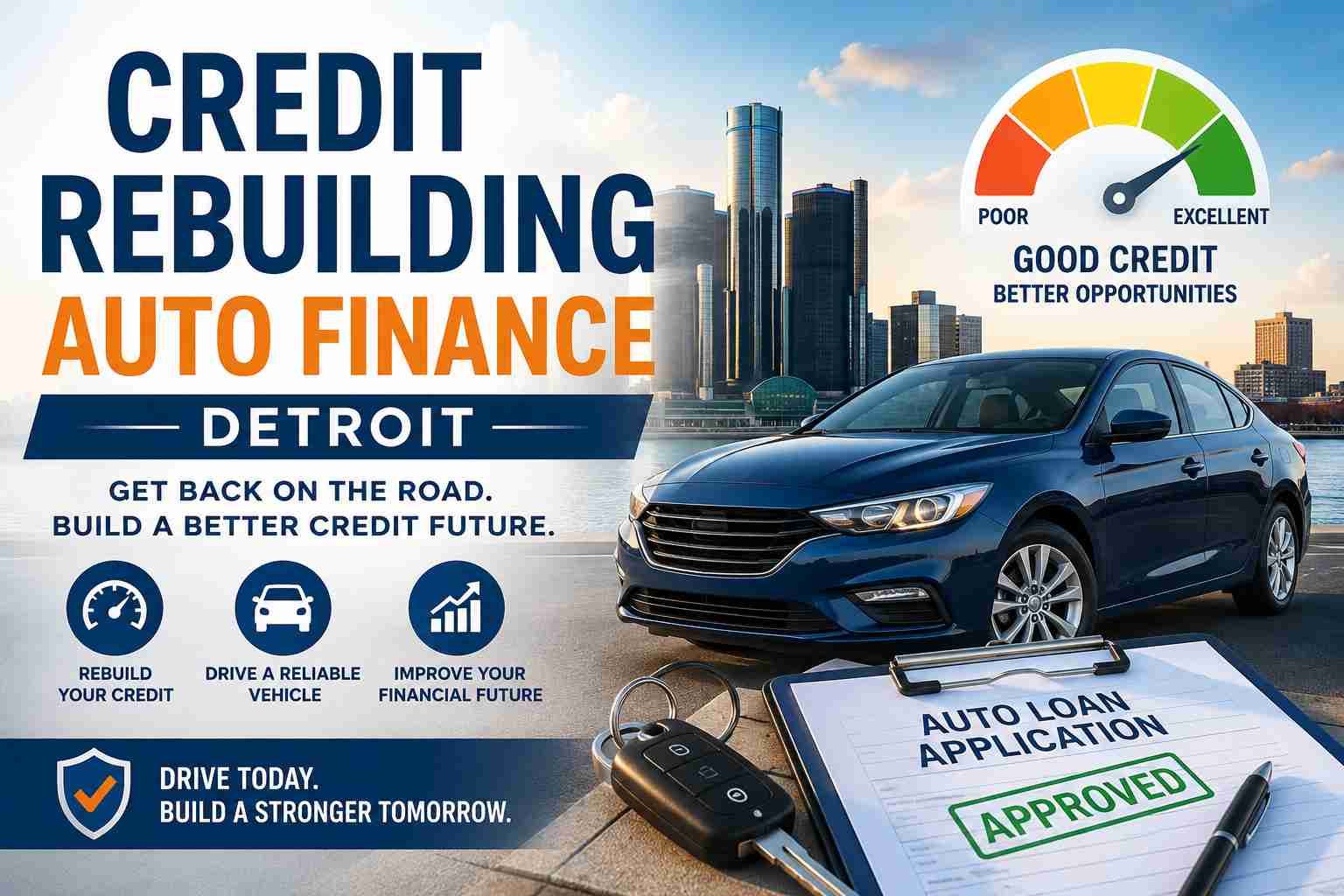
Credit Rebuilding Auto Finance Detroit: A Complete Guide to Getting Back on the Road and Improving Your Credit
Introduction
For many residents of Detroit, reliable transportation is not a luxury—it’s a necessity. Whether you’re commuting to work, taking your children to school, attending medical appointments, or managing daily responsibilities, having access to a dependable vehicle can significantly improve your quality of life. Unfortunately, poor credit, past financial mistakes, bankruptcies, repossessions, or missed payments can make obtaining auto financing difficult.
The good news is that credit-rebuilding auto finance in Detroit offers opportunities for individuals with damaged credit histories to purchase a vehicle while working toward better financial health. Specialized lenders and dealerships understand that financial setbacks happen and provide financing programs designed to help borrowers rebuild their credit over time.
This comprehensive guide explains everything you need to know about credit rebuilding auto finance in Detroit, including how it works, who qualifies, benefits, potential risks, and practical strategies for improving your credit score while financing a vehicle.
Understanding Credit Rebuilding Auto Finance
Credit-rebuilding auto finance refers to vehicle loan programs designed for borrowers with poor, limited, or damaged credit histories. These financing options allow individuals to obtain a vehicle loan while creating an opportunity to demonstrate responsible payment behavior.
Unlike traditional auto loans offered by major banks, credit rebuilding programs focus less on past financial difficulties and more on a borrower’s current ability to repay the loan.
Common applicants include:
- Individuals with low credit scores
- First-time credit users
- Bankruptcy filers
- People with repossessions
- Borrowers with collection accounts
- Consumers recovering from financial hardship
- Individuals with limited credit history
The primary goal is not only vehicle ownership but also credit recovery.
Why Credit Rebuilding Matters
A strong credit score impacts nearly every aspect of financial life. It can affect:
- Loan approvals
- Interest rates
- Credit card eligibility
- Housing applications
- Utility deposits
- Insurance premiums
- Employment opportunities in some industries
Rebuilding your credit through responsible auto financing can create a foundation for long-term financial stability.
Benefits of improving your credit include:
- Lower borrowing costs
- Better loan options
- Easier approval processes
- Increased financial flexibility
- Improved purchasing power
For Detroit residents facing credit challenges, auto financing can become a valuable stepping stone toward financial recovery.
The Credit Challenges Many Detroit Drivers Face
Detroit has experienced significant economic shifts over the years. While the city continues to grow and attract new opportunities, many residents still face financial challenges.
Common reasons for damaged credit include:
Job Loss
Unexpected unemployment can make it difficult to keep up with financial obligations.
Medical Expenses
Large medical bills remain one of the leading causes of financial hardship.
Divorce or Family Changes
Life transitions often impact household finances and credit profiles.
Bankruptcy
While bankruptcy can provide debt relief, it often affects credit scores for years.
Repossession
Losing a vehicle due to missed payments can significantly damage credit.
Student Loan Debt
Many borrowers struggle with balancing student loans and everyday expenses.
Fortunately, credit rebuilding auto finance programs recognize these realities and focus on helping consumers move forward.
How Credit Rebuilding Auto Finance Works
The process is generally straightforward.
Step 1: Credit Evaluation
Lenders review your credit history to understand your financial background.
Rather than focusing solely on your score, many lenders consider:
- Employment stability
- Income level
- Residence history
- Debt-to-income ratio
- Banking history
Step 2: Vehicle Selection
Borrowers choose a vehicle that fits within lender-approved guidelines.
Many dealerships offer:
- Certified pre-owned vehicles
- Budget-friendly used cars
- Reliable commuter vehicles
- Family SUVs
Step 3: Loan Approval
The lender evaluates your application and determines:
- Loan amount
- Down payment requirements
- Interest rate
- Monthly payment
Step 4: Regular Payments
Making on-time payments becomes the key to rebuilding credit.
Most lenders report payment activity to major credit bureaus.
Step 5: Credit Improvement
Consistent payments may gradually improve your credit profile over time.
Who Qualifies for Credit Rebuilding Auto Finance in Detroit?
Qualification requirements vary among lenders.
However, many programs accept borrowers with:
- Credit scores below 600
- Recent bankruptcies
- Previous repossessions
- Collections accounts
- Limited credit history
- No credit history
Lenders typically focus on:
Proof of Income
Examples include:
- Employment pay stubs
- Self-employment income
- Disability income
- Pension income
- Social Security benefits
Proof of Residence
Documents may include:
- Utility bills
- Lease agreements
- Mortgage statements
Valid Driver’s License
Most lenders require a current driver’s license.
Down Payment
A down payment may improve approval chances and reduce financing costs.
Benefits of Credit Rebuilding Auto Finance
Access to Reliable Transportation
A dependable vehicle can increase employment opportunities and daily convenience.
Opportunity to Improve Credit
Each on-time payment may positively contribute to your credit history.
Flexible Approval Requirements
Many lenders evaluate the entire financial picture rather than focusing exclusively on credit scores.
Potential for Future Refinancing
As your credit improves, refinancing may help secure a lower interest rate.
Financial Confidence
Successfully managing an auto loan can help restore confidence after financial setbacks.
Common Mistakes to Avoid
While credit rebuilding auto finance offers opportunities, borrowers should remain cautious.
Choosing an Unaffordable Payment
Never accept a payment that strains your monthly budget.
Ignoring Loan Terms
Read all financing documents carefully.
Pay attention to:
- Interest rates
- Loan duration
- Fees
- Total repayment cost
Missing Payments
Late payments can damage credit further and increase costs.
Financing More Than Necessary
Borrow only what you truly need.
Skipping Vehicle Inspection
Always inspect used vehicles before finalizing a purchase.
Understanding Interest Rates for Credit Rebuilding Loans
Borrowers with damaged credit often face higher interest rates because lenders assume greater risk.
Factors affecting rates include:
- Credit score
- Income stability
- Loan amount
- Down payment
- Vehicle age
- Loan term
While rates may initially be higher, responsible repayment can lead to refinancing opportunities later.
The goal should be long-term credit improvement rather than simply obtaining financing.
How to Increase Approval Odds
Save for a Down Payment
Even a modest down payment can improve approval chances.
Verify Your Credit Report
Review your credit reports for errors before applying.
Maintain Stable Employment
Lenders favor borrowers with consistent income.
Reduce Existing Debt
Lower debt obligations can improve lender confidence.
Provide Accurate Information
Complete loan applications honestly and thoroughly.
Best Vehicle Types for Credit Rebuilding
When rebuilding credit, practicality should take priority.
Recommended options often include:
Compact Sedans
- Affordable payments
- Excellent fuel economy
- Lower insurance costs
Mid-Size Sedans
- Comfortable commuting
- Strong reliability
Compact SUVs
- Versatile transportation
- Family-friendly features
Certified Pre-Owned Vehicles
- Additional quality assurance
- Lower depreciation than new vehicles
Avoid expensive luxury vehicles when rebuilding credit.
The Importance of On-Time Payments
Payment history is one of the most influential factors in credit scoring models.
Benefits of timely payments include:
- Improved credit profile
- Better future loan opportunities
- Increased lender confidence
- Reduced financial stress
Many successful credit rebuilding stories begin with consistent auto loan payments.
Consider setting:
- Automatic payments
- Calendar reminders
- Budget alerts
These tools can help prevent missed due dates.
Can Bankruptcy Applicants Get Auto Financing?
Yes.
Many Detroit lenders work with borrowers who have filed:
- Chapter 7 bankruptcy
- Chapter 13 bankruptcy
In fact, some lenders specialize in post-bankruptcy financing.
Applicants may need:
- Bankruptcy discharge papers
- Proof of income
- Down payment funds
Obtaining and successfully managing an auto loan after bankruptcy can contribute positively to financial recovery.
Rebuilding Credit Faster While Financing a Vehicle
Credit rebuilding involves more than just paying an auto loan.
Additional strategies include:
Pay All Bills on Time
Consistency across all accounts matters.
Keep Credit Card Balances Low
Lower utilization rates can improve scores.
Avoid Excessive Credit Applications
Too many inquiries may negatively impact credit.
Monitor Credit Reports
Track progress regularly.
Build Emergency Savings
Financial reserves reduce the risk of missed payments.
Combining these practices with responsible auto financing can accelerate credit recovery.
Refinancing After Credit Improvement
As your credit score improves, refinancing may become available.
Potential advantages include:
- Lower interest rates
- Reduced monthly payments
- Shorter loan terms
- Lower total borrowing costs
Many borrowers refinance after 12 to 24 months of successful payment history.
Why Detroit Residents Choose Credit Rebuilding Auto Finance
Detroit’s economy continues evolving, creating new opportunities for residents.
Reliable transportation remains essential for:
- Manufacturing jobs
- Healthcare careers
- Skilled trades
- Education
- Entrepreneurship
Credit-rebuilding auto finance helps individuals overcome past financial difficulties while gaining access to the transportation needed for future success.
For many families, it serves as both a transportation solution and a financial recovery tool.
Final Thoughts
Credit rebuilding auto finance in Detroit provides a practical pathway for individuals with damaged credit to regain financial momentum. While poor credit can create obstacles, it does not have to prevent vehicle ownership or future financial success.
The key is choosing an affordable vehicle, understanding loan terms, making every payment on time, and maintaining responsible financial habits. Over time, these actions can strengthen your credit profile, improve lending opportunities, and create greater financial stability.
By approaching auto financing strategically, Detroit drivers can use vehicle ownership as a powerful tool to rebuild credit and achieve long-term financial goals.
Frequently Asked Questions (FAQs)
1. What is credit rebuilding auto finance?
Credit rebuilding auto finance is a vehicle loan program designed for borrowers with poor or damaged credit who want to purchase a vehicle while improving their credit history.
2. Can I get approved with a very low credit score?
Yes. Many lenders consider factors beyond your credit score, including income, employment stability, and the amount of your down payment.
3. Will an auto loan help improve my credit?
If the lender reports payments to credit bureaus and you consistently make on-time payments, the loan may help improve your credit profile.
4. Do I need a down payment?
Not always, but having a down payment can increase approval chances and lower overall financing costs.
5. Can I get financing after bankruptcy?
Yes. Many lenders offer auto financing programs specifically for borrowers recovering from Chapter 7 or Chapter 13 bankruptcy.
6. How long does it take to rebuild credit through an auto loan?
Results vary, but many borrowers begin to see positive changes within several months of consistent, on-time payments.
7. Are interest rates higher for credit rebuilding loans?
Generally, yes. Lenders charge higher rates to offset increased risk. However, rates may improve later through refinancing.
8. Can a repossession prevent me from getting approved?
Not necessarily. Many lenders work with borrowers who have previous repossessions on their credit reports.
9. What documents are usually required?
Typical requirements include proof of income, proof of residence, a valid driver’s license, and sometimes references.
10. Should I refinance after improving my credit?
Refinancing can be beneficial if it helps secure a lower interest rate, lower payment, or shorter loan term.
Leave a Reply